The Fourth Turning Leader

Build the code that holds when institutions fail.

War. Political volatility. AI rewriting industries faster than institutions can name them. The architecture a generation of leaders trained inside — peace, stability, predictability — was the exception in history, not the rule. It is ending.

The decisions still land on you. Run the company. Hold the team. Raise the family. Make the calls no process can absorb, in a world the playbook was not written for.

This is the practice for building a code — a written set of commitments made before the pressure peaks — for leading inside that.

Start with the free assessment. No account required.

IVCRISIS(Today)IHIGHIIAWAKENINGIIIUNRAVELING

The crisis era has arrived.

Chris Myers Featured In

The New York TimesThe Wall Street JournalEntrepreneurForbesMSNBC
§

Five modes. Five figures. One question: which does this moment require of you?

Two thousand years of evidence about what holds when institutions don't.

Woodcut portrait of Cato the Younger, Roman Senator and Stoic philosopher who embodied the Holding Mode of honor under pressure

Holding

Cato

When the order around you bends toward expediency, you hold the line on the principle no one else will name — even when holding costs you everything.

Woodcut portrait of George Washington, first U.S. President who embodied the Restraining Mode by declining power to preserve constitutional order

Restraining

Washington

When you have the power to take more, you decline it. The precedent matters more than the moment, and the next century is watching.

Woodcut portrait of Seneca the Younger, Stoic philosopher and advisor to Emperor Nero who exemplified leading with integrity while navigating compromise

Eroding

Seneca

When you must lead inside a system you cannot fix, you stay long enough to do good without becoming the corruption.

Woodcut portrait of Abraham Lincoln, 16th U.S. President who embodied the Growing Mode and was transformed by crisis into moral clarity

Growing

Lincoln

When the moment outgrows the leader you were, you let the crisis remake your moral framework — in public, at cost.

Woodcut portrait of George C. Marshall, architect of the postwar world order who embodied the Embedding Mode by building institutions that outlast the leader

Embedding

Marshall

When you will not be there for the next crisis, you build the people, standards, and institutions that hold without you.

§

What leaders are taking from the book.

What readers and institutional leaders are saying about Honor Under Pressure.

★★★★★
“Most leadership books are written for calmer times; Honor Under Pressure is written for this one. If you’re a leader who suspects the old frameworks aren’t holding as well as they used to, this book will name what you’ve been sensing — and give you something to do about it.”

Akshara A.

Verified reader review

“In a moment when community banks are being asked to lead through unprecedented uncertainty, The Fourth Turning Leader gives bankers a clear code for preserving integrity, judgment, and courage when the pressure is highest. Chris Myers understands both Main Street finance and the generational forces reshaping our communities, and he turns that insight into practical guidance any community bank leader can put to work. This kind of grounded, character-first leadership is exactly what our customers, employees, and hometowns are counting on.”

Michael Van Norstrand

Executive Director, Independent Community Bankers of Colorado

★★★★★
“The idea that your character gets built before the crisis hits, not during it, stuck with me. It doesn’t just theorize — it gives you an actual framework to build your own code before things get hard.”

Gamat

Verified reader review

§

How the practice works

Diagnose the pressure. Build the code. Test it against one real decision.

The Leader Lab moves leaders through a private practice sequence: name the pressure, identify the shadow, write the code, work the decision, track the cost, and transmit the standard.

§

Inside a Fourth Turning

The supports leaders used to rely on are weakening at the same time.

Every morning brings a different world. Trade policy turns on an announcement. Alliances built over generations are tested in a news cycle. Technologies that border on magic are reshaping industries before institutions can name them. The architecture itself is failing — and the people you trusted to hold the line are waiting for someone else to move.

The pattern is older than the headlines. Historians William Strauss and Neil Howe named it: roughly every eighty years, a society moves through a saeculum — four generations passing through a high, an awakening, an unraveling, and a crisis. The fourth phase is when accumulated debts come due at once and the old order has to clear ground for what comes next. We are seventeen years into this one.

That is why this decade leads differently than the ones it followed. Inside a Fourth Turning, the supports leaders used to rely on — institutional legitimacy, settled consensus, predictable incentives, time to deliberate — weaken together. The frameworks you were trained on were built for a stable phase. They were not designed for this one.

Weakening together

  • Institutional legitimacy

    The authority you used to be able to invoke.

  • Settled consensus

    The agreement you used to be able to wait for.

  • Predictable incentives

    The rewards you used to be able to plan around.

  • Time to deliberate

    The runway you used to be able to expect.

This is not the first time. America has lived through three Fourth Turnings before this one — the Revolution, the Civil War, the Depression and the Second World War. Each one looked unprecedented from inside. Each one produced leaders who built and held a code under pressure: Washington, Lincoln, Marshall. They are the reason we can prepare for this one.

Cycle I1775 – 1860

Revolution

85-year saeculum. Crisis forged the nation.

Cycle II1860 – 1929

Civil War

69-year saeculum. Crisis nearly broke the nation.

Cycle III1929 – 2008

Depression / WWII

79-year saeculum. Crisis rebuilt the world order.

Cycle IV2008 – present

NOW

Year 17 of the Crisis. We are inside it.

WE ARE HERE — Year 17 of the Crisis

The hard calls you cannot outsource to process are why this practice exists. What follows is how to build a code that holds when the supports do not.

§

When to use it

Use this when uncertainty stops being background noise.

The Leader Lab is built for leaders operating in a crisis age, when the old supports still exist but no longer carry the weight they once did.

Use it when

  • Your institution is still functioning, but the assumptions beneath it are shifting.
  • Your team wants certainty, but the honest answer is that the map has changed.
  • You are being asked to make a call before the data is complete and before consensus can form.
  • The incentives around you are pushing toward delay, performance, or quiet compromise.
  • Technology is accelerating decisions faster than judgment can mature.
  • The public story and the operating reality are starting to come apart.
  • A policy, funding source, market condition, or stakeholder relationship you relied on has changed faster than your system can absorb.
  • You can feel that the next decision will not just solve a problem. It will teach people what kind of institution you are building.

That is when a code built in advance becomes practical. Not as inspiration, but as the operating structure for decisions made under pressure.

§

Why a code, not another framework?

Pressure negotiates with anything you have not already decided.

Frameworks help when the environment is stable enough to honor them. A Fourth Turning is different. Consensus thins. Incentives distort. Institutions protect themselves. The leader is left with decisions no process can absorb.

Policy weakens

A policy can route a decision, but it cannot carry the moral weight when the institution is protecting itself.

Consensus thins

Waiting for alignment can become a sophisticated form of avoidance when trust is already low.

Incentives distort

The rewards of the moment often favor fear, appetite, approval-seeking, or control.

Historical anchor

Washington restrained power when he could have kept it.

At the end of the Revolution, Washington had the legitimacy to turn victory into personal power. His code required restraint: surrender command, return authority to civilian rule, and refuse the temptation every crisis offers the victorious leader.

In that moment, the question is not what framework you know. It is what line you already decided you would not cross.

A code is not a slogan. It is a written set of commitments made before the pressure peaks. The Leader Lab helps a leader build, test, and use that code against real decisions.

§

What the work produces

The Leader Lab turns pressure into written tools.

The point is not to finish a course. The point is to leave with tools you can return to when the next hard call arrives.

Tool 01

Honor Code

Commitment · 01

"I will not make a decision about another person without first having looked them in the eye that week."

Commitment · 02

"I will name the cost of every plan before I name the upside."

Commitment · 03

"I will not delegate a hard conversation I am avoiding."

Drafted March 14, 2026 · Reviewed quarterly

Woodcut portrait of Cato the Younger, Roman Senator and Stoic philosopher who embodied the Holding Mode of honor under pressure

guided by · Cato

Tool 02

Decision Memo

Pressure

"Board wants the layoff number by Friday. Operating team wants two more weeks."

Options

"Hold the line on 14, and explain why honestly. Or take the 22 and lose the team’s trust."

Commitment

"Hold at 14. I will own the conversation with the chair myself, not through Sarah."

Logged 03/14/2026 · Reviewed 03/21/2026

Woodcut portrait of George Washington, first U.S. President who embodied the Restraining Mode by declining power to preserve constitutional order

guided by · Washington

Tool 03

Shadow Audit

Prompt

"Where this week did I confuse being decisive with being right?"

This week

"Tuesday standup. Cut Marco off mid-sentence because I’d already decided. Wrong call. Apologized Wednesday."

Pattern

"Same shadow as Q3. I decide faster when I am unsure, not slower. Naming it before the next 1:1."

Weekly · Private to me

Woodcut portrait of Seneca the Younger, Stoic philosopher and advisor to Emperor Nero who exemplified leading with integrity while navigating compromise

guided by · Seneca

A written standard for what you will not cross, what you will restrain, what will test you, where you must grow, and who needs to inherit the code.

A private record of one consequential call, worked against your code before pressure rewrites the logic.

A check on the failure pattern most likely to distort your judgment under pressure.

§

The paths

Choose your path

The book is the framework. The assessment names the mode. The Leader Lab builds the code.

Most leaders start with the free assessment. When the result names a real gap, move into the Leader Lab to build the code, work the decision, and keep a record of whether the code holds.

Start free

Mode Finder

Name the pressure mode your current moment requires and the shadow pattern most likely to distort it.

Start small.

Decision Room Pass

Work one consequential decision through the code, the compromise calculus, and the institutional character test.

Applies toward Self-Guided Leader Lab if you upgrade.

Best for readers of the book

Self-Guided Leader Lab

Build the complete Code Packet at your own pace: mode profile, shadow audit, honor code, decision memo, endurance ledger, and transmission plan.

Highest impact

Six-Week Leader Lab

Build the Code Packet with live structure, peer accountability, weekly deliverables, and a Hard Call Clinic.

$995one-time

Join the Cohort Waitlist

Multiple cohorts forming — see available dates at checkout.

§
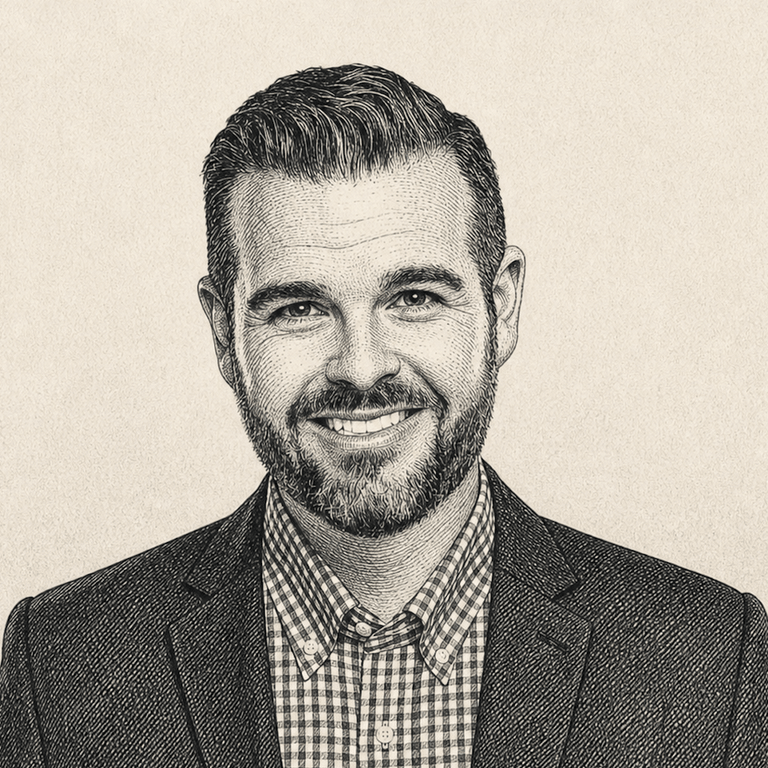
Chris Myers, hedcut portrait

The author

Chris Myers

Chris Myers is CEO of B:Side Capital, a mission-driven SBA lender operating across the American West, and faculty in entrepreneurship at Arizona State University's W.P. Carey School of Business. Previously, he founded BodeTree and Yellow Express USA. He is the author of four books, including Honor Under Pressure and The B:Side Way. His work and commentary have appeared in The New York Times, The Wall Street Journal, Forbes, Entrepreneur, and on MSNBC.

He writes for leaders who feel the ground shifting — and need a practice for leading anyway.

The framework is built from twenty years of operating decisions, not consulting frameworks. The Leader Lab is the practice I built for myself first.

Chris Myers

§

For organizations

Bring the language to the team.

For executive teams, boards, and leadership groups operating under institutional stress.

Team diagnostics
Mode Map and Shadow Heat Map for your leadership team. What each member defaults to under pressure, and where the gaps are.
Workshops
Half- or full-day working sessions on the Five Modes framework, applied to one decision your team is actually carrying.
Scoped advisory
A monthly retainer on the highest-pressure decisions: board, succession, restructuring. Each session produces a written record at the end.
Request a Conversation

Engagement formats

Single workshop

A focused half-day session on a defined pressure point: board call, restructuring, succession. One outcome, one written record.

Quarterly retainer

A standing seat at the table for the calls that cannot wait for the next planning cycle. Four sessions, monthly check-ins, and a running ledger.

Embedded advisory

For executive teams carrying a multi-quarter inflection: restructuring, post-crisis rebuild, leadership transition. Scoped together.

Build the code

The storm is already here. Build anyway.

The leaders history remembers built their code before the crisis arrived. The ones who waited improvised — and most of those improvisations did not hold.

Eight minutes. No account needed. Start with the assessment.

Free · 8 minutes · No account needed.

Free · 8–12 minutes

Start Assessment